Hello,
Apologies that this is a little late. June has been a busy one, so I’m having a quiet week doing a spot of translation, editing one of next year’s titles and catching up with the newsletter. So whilst the tennis balls in SW19 gently thwack away in the background, let’s imagine it’s the lapping of waves and set off on another meander through things Mediterranean.

See our French books - click above!
Book fairs are funny things. Essentially, they mean two days speed dating over rights in half-hour slots where bibliophiles with logorrhoea try and convince each other to buy, buy, buy. It sounds a challenge, but is, I promise, strangely addictive. The Paris Book Market is probably my favourite, not only because Cole was absolutely right and we all love Paris in the springtime, but because you get to meet such a breadth of the French book world, from huge players like Gallimard to tiny indies like us and because, between them, they have so many tempting things. Boy, do the Francophones know how to write. This year was particularly fruitful, and I’ve come away up with a TBR list up to my knees. There are some real gems, so with a bit of luck, you’ll see the results of all that chatting in about eighteen months’ time.
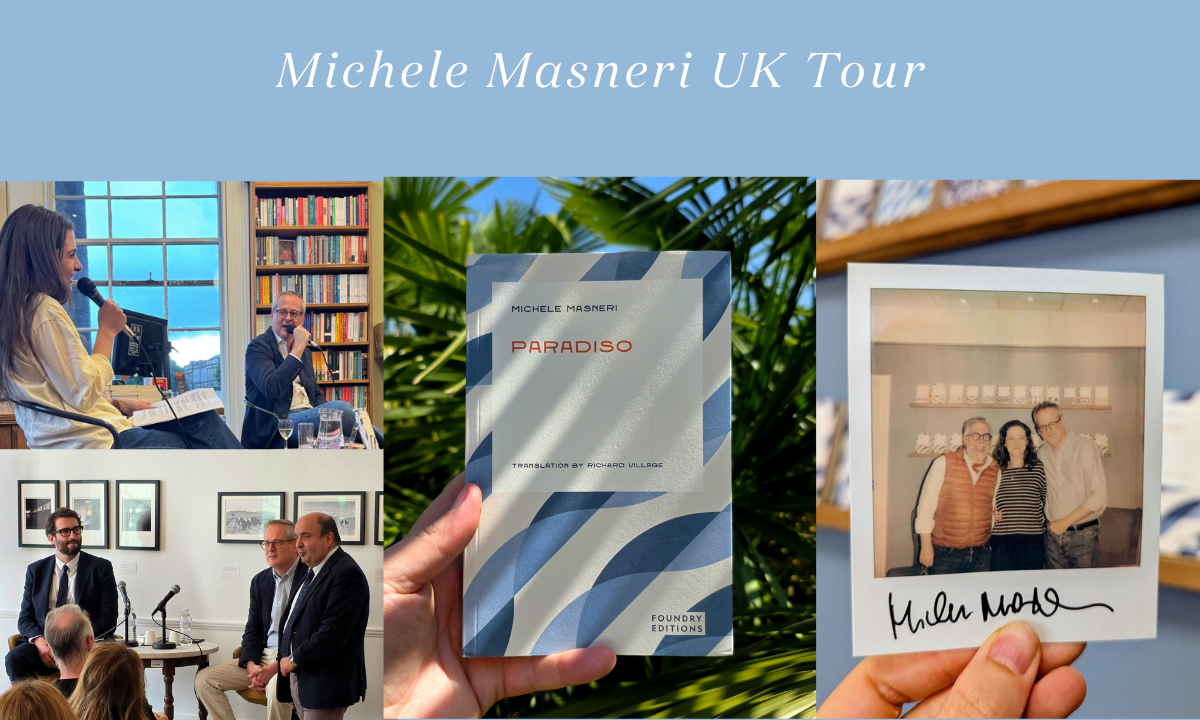
Michele Masneri, he of Paradiso, was over for a week of four fantastic events. Firstly, in Edinburgh, where he spoke to a crowded (and very beautiful) room in Toppings after he had done a Q&A session with the incredibly sharp readers at the Italian Cultural Institute’s book club. After Scotland, we had a great evening at London’s Italian Cultural Institute where Michele was in exceedingly amusing conversation with fellow journalist, Antonello Guerrera, UK correspondent for La Repubblica before rounding off in Stroud – because surely the Cotswolds are our Paradiso – to a packed room of inquisitive readers at the brilliant new Borderless Books. I’m pleased to say Paradiso seems to be finding its way into readers’ hearts. Its humour, extraordinary characters, lush settings and panorama of the old world of journos and film pundits hitting up against the new world of influencers makes it such a good Roman holiday for everyone.
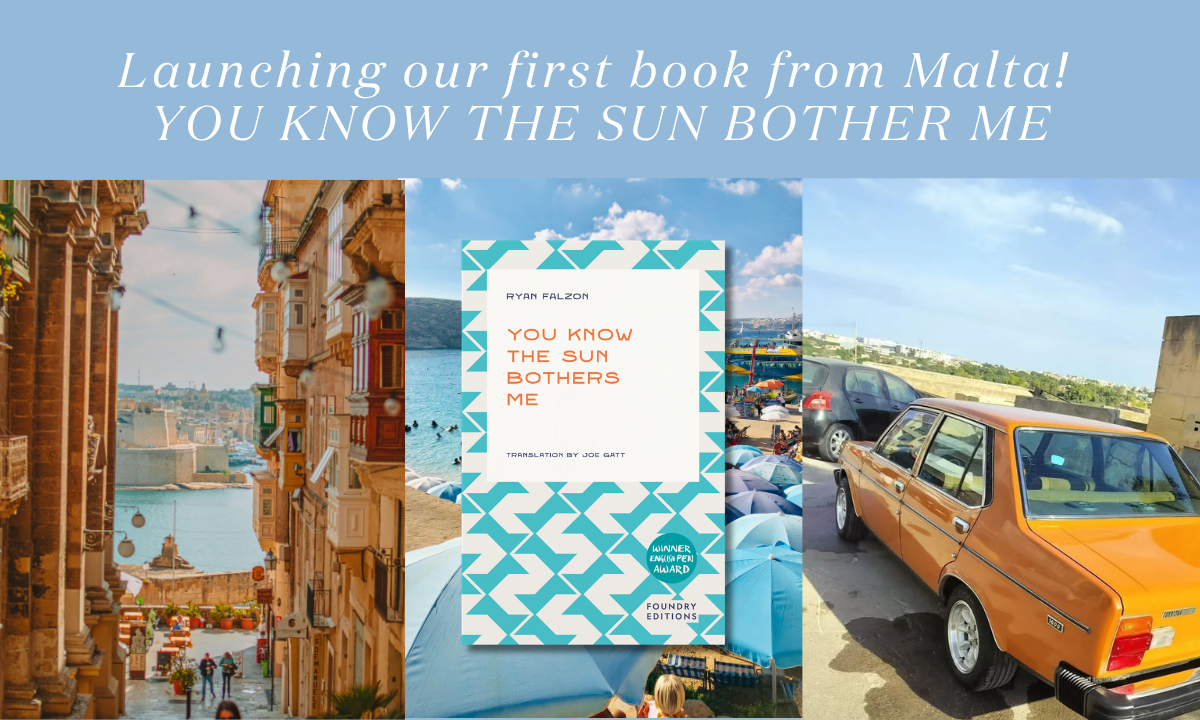
June also saw Foundry land in Malta for the first time. If feedback from bookshops and the socials are anything to go by, You Know the Sun Bothers Me is going down well too. As the sun beats down on us in the UK, and the holidays blessedly loom, have a think about giving this millennial male Maltese epic a go. It’s illuminating! In exciting news, Ryan will be touring the UK in September to talk about the book and as soon as we have all the details, we’ll let you know.

June is one of favourite months, mostly because of Independent Bookshop Week, where we get to spend time with such wonderful booksellers, and meet our readers. This year we partnered with Mostly Books in Abingdon and West Kirby Books in the Wirral, and I also spent a day and evening at Borderless Books in Stroud. It’s been truly inspirational; along with the other amazing indie bookshop owners we collaborate with, they have managed to create vibrant communities of customers and fans who are loyal, zealous and genuinely buy.
Which got me thinking. If anyone can save the high street, it’s booksellers. I mean it. Before starting Foundry, I spent a lot of time working with shops. In fact, my first ever project as a budding branding boy way back at the end of the nineties was working on the Piccadilly Waterstones, which was truly revolutionary at the time for its size, layout and approach to bookselling. (If I’m honest, I was slightly grumpy because I loved Simpson – they did an excellent line in own label sea island cotton shirts.) But over the past month, I’ve been witness to three bookshops and their owners who could really teach the apparently dead world of bricks-and-mortar retail a thing or too.
So what’s the recipe? I’d say three things stand out. They know and love what they sell and can talk about it engagingly to anyone who cares to listen. They want to know their customers, properly and personally, so they can focus their energies on them in a really individual way. Finally, and perhaps most importantly, they are generous to a fault with their expertise and knowledge, their time, their energy and their spaces.
Now I realise that this takes huge amounts of hard work – all good things do – but I really believe if more people looked to what a good bookseller can achieve, we might be able to lure people back from the online shopping brink and breathe some life back into the heart of our communities. We all love stories and retail is just another form of storytelling, so booksellers, who are the storytellers of stories, naturally have a thing or two to tell the rest of us.
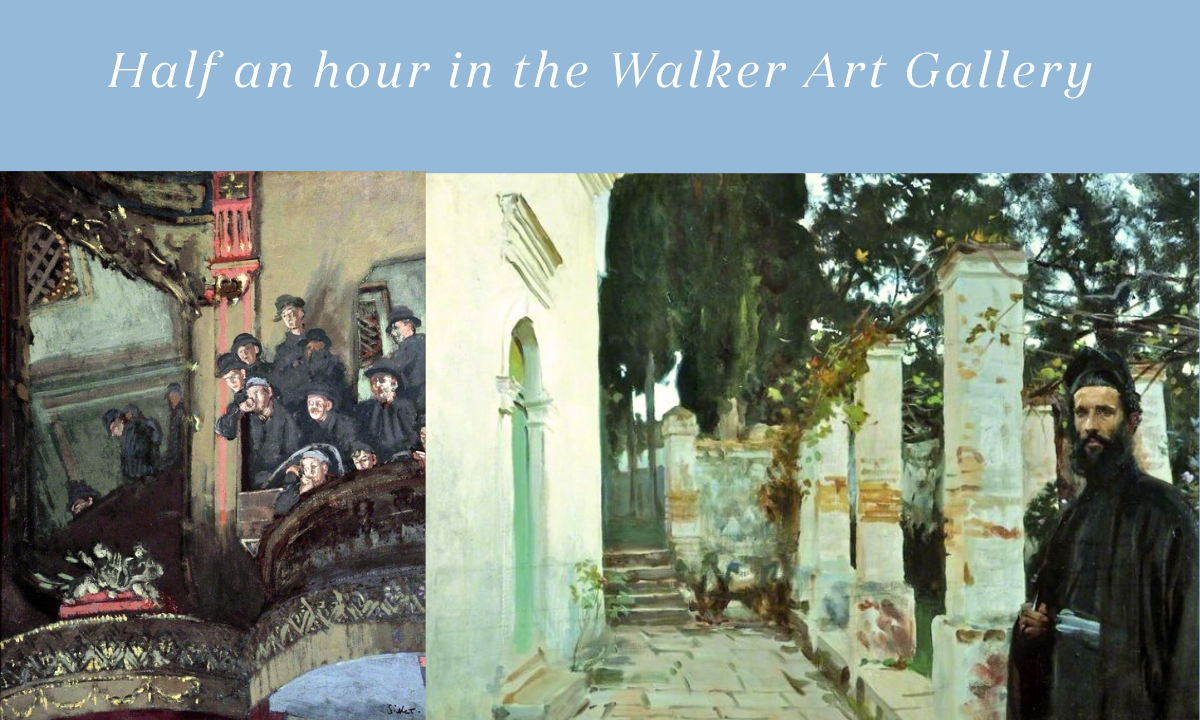
With all the dashing around, there’s not been much time for anything other than books, but on my way to West Kirby, I managed to grab a cheeky half-hour in the Walker Art Gallery in Liverpool. It was my first visit and for those who don’t know it, I can’t recommend it highly enough. As you might know, Foundry is based on a kitchen table in Camden Town and I’m very keen on the work of that group of turn-of-the-twentieth-century painters who bear its name. Chief among them is Walter Sickert whose paintings tell such an eloquent story of life in the grimy Camden streets, and one of my favourites, Gallery of the Old Bedford, is in Liverpool. This snapshot of the upper balcony of a late Victorian music hall is a powerfully atmospheric work. Tenebrous, with the punters crammed into every inch of space ogling the performers, you can feel the clammy claustrophobic air, smell the gaslights and bodies and damp wool and you realise what a good job it is that the lights will never go up and reveal the peeling gilt on the cherubs or the chipped plaster of the balcony’s carved swags. I was delighted to be able to stand in front of it in the flesh (oil on canvas?) and be grateful that Camden has changed. Not massively, but just enough!
What I didn’t expect to find on this Camden Town mission, but was delighted I did, was a picture that perfectly represented the other, Mediterranean side of Foundry. Hanging just around the corner from the Sickert is a very unusual John Singer Sargent, not of some haughty mercantile Liverpool beauty, but of a very enigmatic scene in Corfu. Vespers was painted in 1909 when Sargent had tired of dealing with his society sitters, had enough money in the bank to do just as he pleased, and had naturally made his way to the Warm South. What a fantastic, and fantastically mysterious painting. Normally, Sargent is all about the surface – the social position of his sitters, the lush fabrics that swathe them, their glittering jewels – which is reflected in his rapidly executed, impressionistic brushstrokes. But this does something very different. In the beautiful, reddening evening light, a deserted path leads off into the distance between a building and a walled garden and in the foreground shadows a handsome orthodox priest stands motionless and almost expressionless. Who is he? What is he doing? Why is he there? Is he a warning, an invitation or maybe both? This odd subject matter and strange composition really seduced me and brought to life in paint why the lands around the middle sea hold such fascination for us. Like the painting, they offer the promise of something entirely out of the ordinary from our everyday lives and show us the possibility that something, anything might happen, and at any moment, an entirely unexpected story might unfold.
July is a quieter month, and we’re going to be taking some deep breaths. Whether you’re going away or staying in the quasi sun-bothering heat of the UK, we hope you have a lovely time and maybe find a Foundry book or two as a companion.
Saħħa,
Richard
Richard Village
Editor
Foundry Editions